
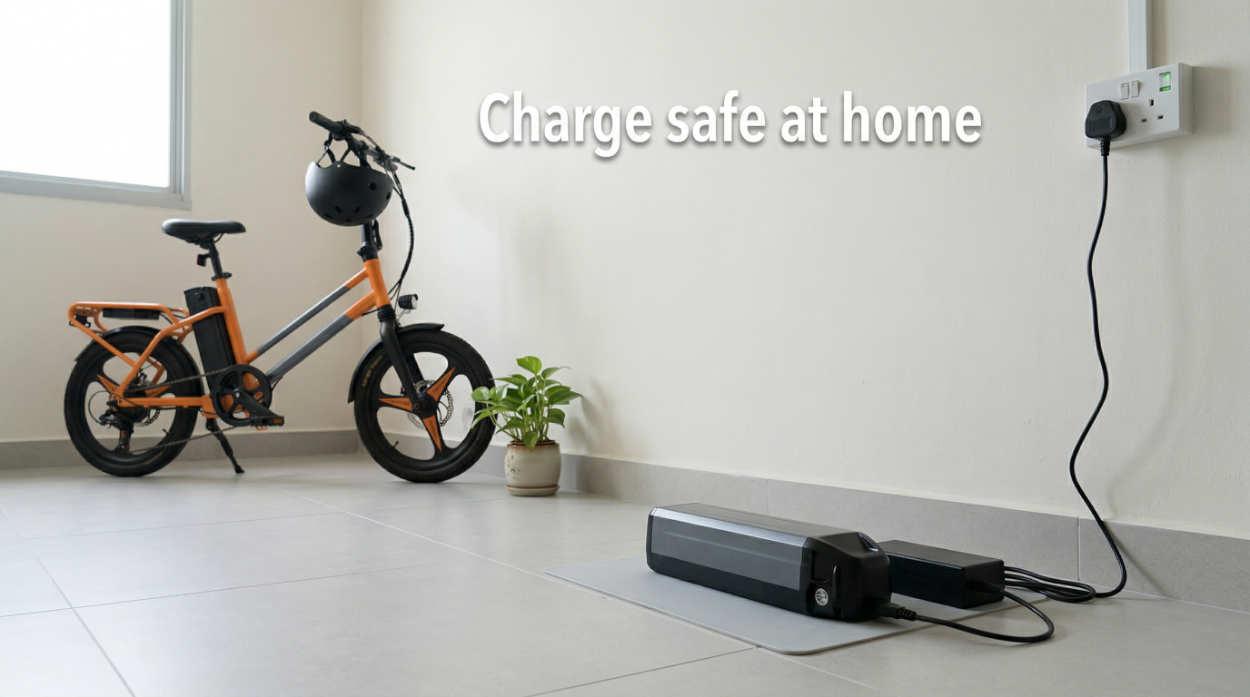
Singapore HDB homes are compact. Corridors and lift lobbies are shared. When a lithium battery goes wrong, smoke and heat spread fast. That is why battery safety is a serious topic, especially if you ride daily for work or school. Source
This guide uses Maximal.sg context and real Singapore rules. It is written for people searching things like “why ebike battery explode in lift”, “ebike battery safety”, and “pmd charging home”. Source
Why e-bike battery safety is a real concern in Singapore HDBs
Battery fires are mainly linked to thermal runaway, charging habits, and non compliant parts. In Singapore, SCDF advises not charging overnight or unattended, not charging near exits, and avoiding non original batteries. LTA rules also focus on certified devices and warn that illegal battery or motor swaps can void safety certification and increase fire risk.
Fires happen in small spaces, not open carparks
When charging happens near doors, corridors, or escape paths, it becomes a life safety issue. SCDF’s public safety materials highlight simple rules that reduce risk, such as charging on a hard surface, away from combustibles, and not leaving charging unattended or overnight. (Default)
“In the lift” is not the real cause. It is the battery condition and the choices before it
People talk about “battery explode in lift” because that is where videos go viral. In reality, the risk usually starts earlier. Common triggers include damaged packs, cheap replacement cells, wrong chargers, and DIY mods. LTA also publicly warns that swapping electrical parts like batteries and motors with third party components can void safety certification and raise fire risk. (CNA)
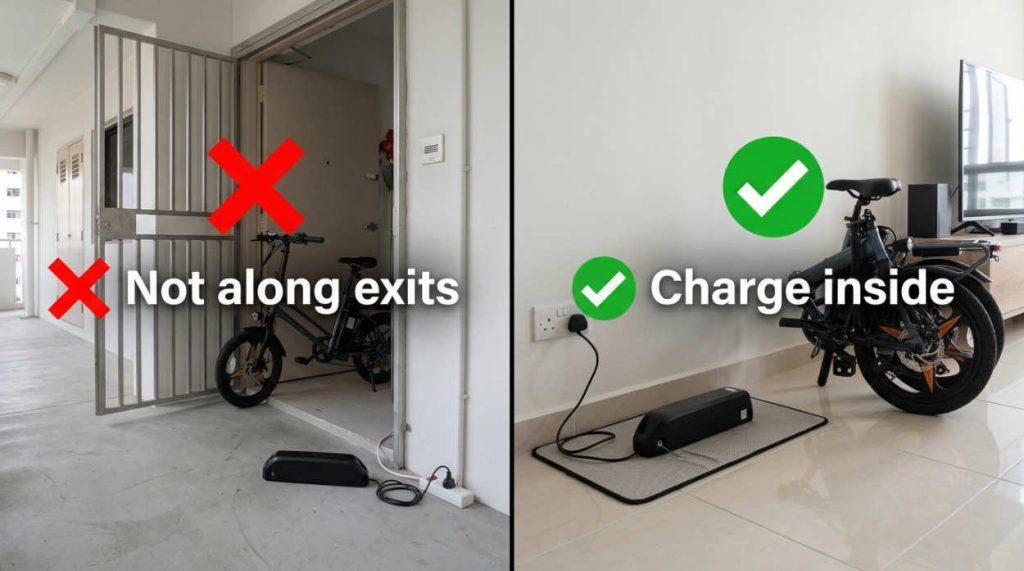
The science of thermal runaway. Why do batteries catch fire
Thermal runaway is a chain reaction inside a lithium battery cell. Heat builds. The battery vents flammable gas. The pack can then ignite, especially if the battery is charging or has a damaged cell. Source
What starts thermal runaway
Common causes include:
- Overheating during charging or after a ride
- Internal short circuit from damage or manufacturing issues
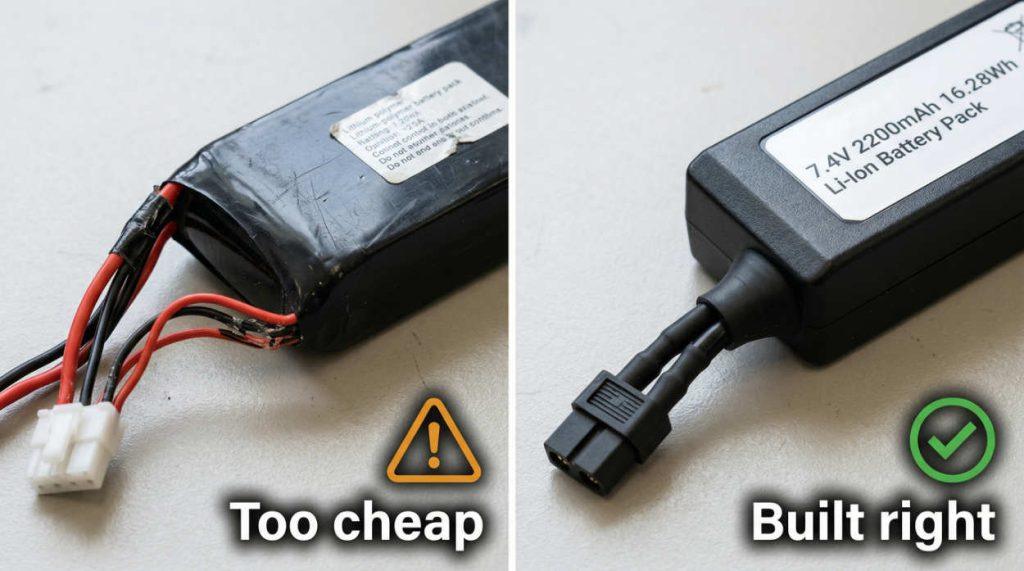
- Poor quality cells and weak pack assembly
- Using the wrong charger or a modified connector
- Battery management system problems that fail to cut off properly
SCDF’s guidance focuses on preventing the real world triggers that lead to overheating or uncontrolled charging. One clear point is to avoid charging immediately after use and to avoid long unattended charging, especially overnight. (Default)
Why “cheap batteries” fail more often
A lower price can mean corners were cut in:
- Cell quality and consistency
- Pack welding and insulation
- Battery management system quality
- Protective design against vibration and impacts
You can also see the enforcement angle. LTA has called out illegal modifications, including replacement of electrical parts like battery and motor hub, as a common issue that increases risk and voids safety certification. (CNA)
Singapore heat and humidity make bad habits worse
Heat soak is real here. Riders park, come home sweaty, and plug in right away. If the battery is still hot, you have less safety margin. That is why the “cool down first” habit matters. Source
Essential SCDF and LTA rules that matter for HDB charging
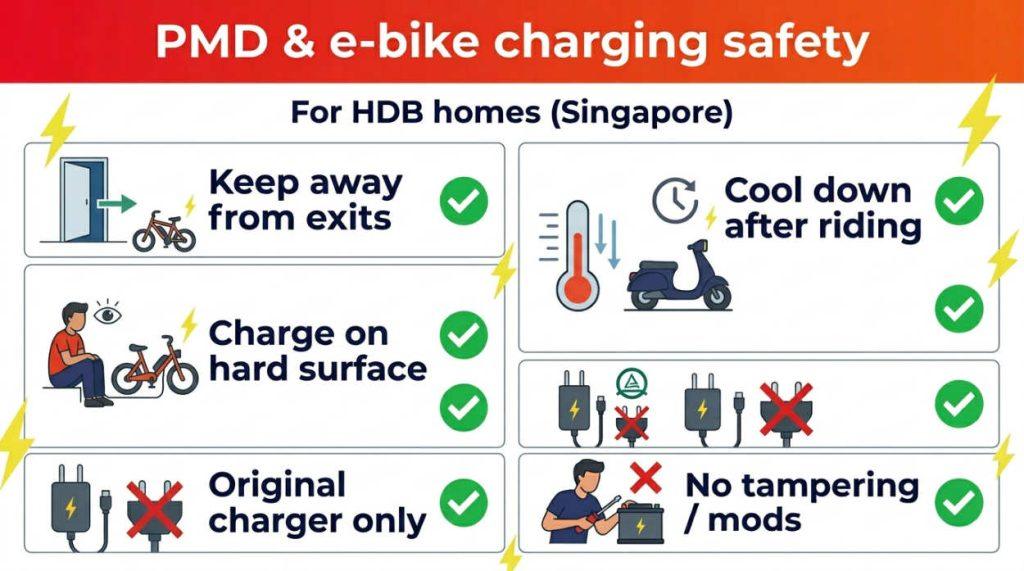
If you remember only five rules, remember these. Source
1. Do not charge near combustible items or along escape paths
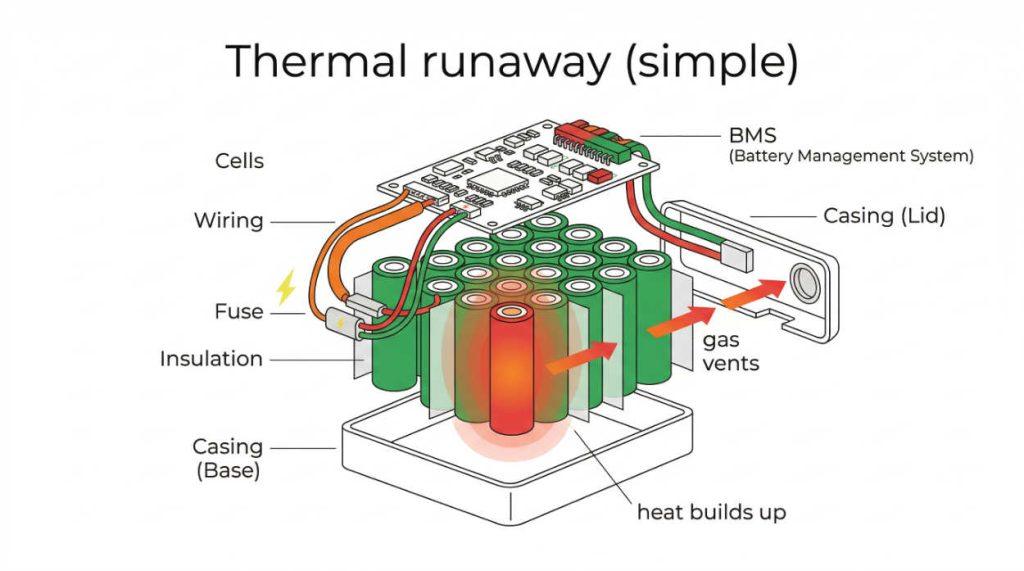
SCDF advises not charging near combustibles and not charging along an escape path. That includes near your front door area if it blocks exit routes when things go wrong. (Default)
2. Do not charge immediately after riding
Let the battery cool. SCDF’s public materials say not to charge immediately after use. (Default)
3. Do not use non original batteries. Do not tamper
SCDF says not to buy or use non original batteries and not to tamper, modify, or attempt repair on your own. (Default)
4. Use compliant devices and keep them compliant
LTA’s rules focus on compliance and safety standards. LTA also warns that non compliant devices are an offence in public use contexts. More importantly for safety, LTA has highlighted illegal modifications such as replacing battery or motor hub with third party components, which can void certification and raise fire risk. (Land Transport Authority)
Where Maximal.sg fits in
Maximal.sg publishes consumer focused safety education, including an explainer on UL2272 and why it matters for electrical system safety.
Maximal.sg also sells e-bike batteries and related accessories, which matters because battery quality and compatibility are where many home charging problems start.
How to choose a safer replacement battery and avoid dangerous “upgrades”
Most scary battery stories start with “I changed the battery because the range dropped.” Source
Match voltage and system compatibility
Do not “upgrade” voltage or hack connectors. A mismatch can cause overheating in the charger, controller, wiring, or pack. Source
Be suspicious of too good to be true pricing
Counterfeit labels exist. The safest move is to buy from a reputable local seller that supports the device type you use and can advise on compatibility. Source
Look for real safety education and support
Maximal.sg’s content focus on safety standards like UL2272 is useful because it trains buyers to care about compliance instead of only range and speed. ([maximal.sg][4])
Avoid mod culture if you ride in HDB estates
Even if you only ride “near home”, you still charge at home. LTA’s enforcement messaging makes it clear that battery and motor swaps are common illegal modifications and they raise fire risk. (CNA)
Step by step. The correct way to charge your PAB or PMD at home
This is a practical setup that works in real Singapore flats. Source
Step 1. Use only the original charger
Wrong chargers can overheat or fail to cut off properly. If your charger casing feels unusually hot, stop using it and get it checked. Source
Step 2. Set up a dedicated charging spot
Pick a hard surface. Keep it open. Do not charge on beds, sofas, or carpets. SCDF guidance supports charging on hard surfaces and avoiding combustibles. (Default)
Step 3. Keep it away from exits and clutter
Do not charge along escape paths. That includes near the main door area if that is your exit route. (Default)
Step 4. Let it cool after a ride
Do not plug in right after you reach home. Give it time. SCDF guidance says not to charge immediately after use. (Default)
Step 5. Quick daily checks that catch problems early
- Swelling or bulging pack
- Strange sweet solvent smell
- Hissing sounds
- Cracked casing or loose port
- Abnormally hot pack while charging
If you notice any of these, stop charging and isolate the device in a safer way while you seek professional help. Source
What to do if a battery malfunctions or catches fire
When lithium batteries burn, the goal is to protect life first. Source
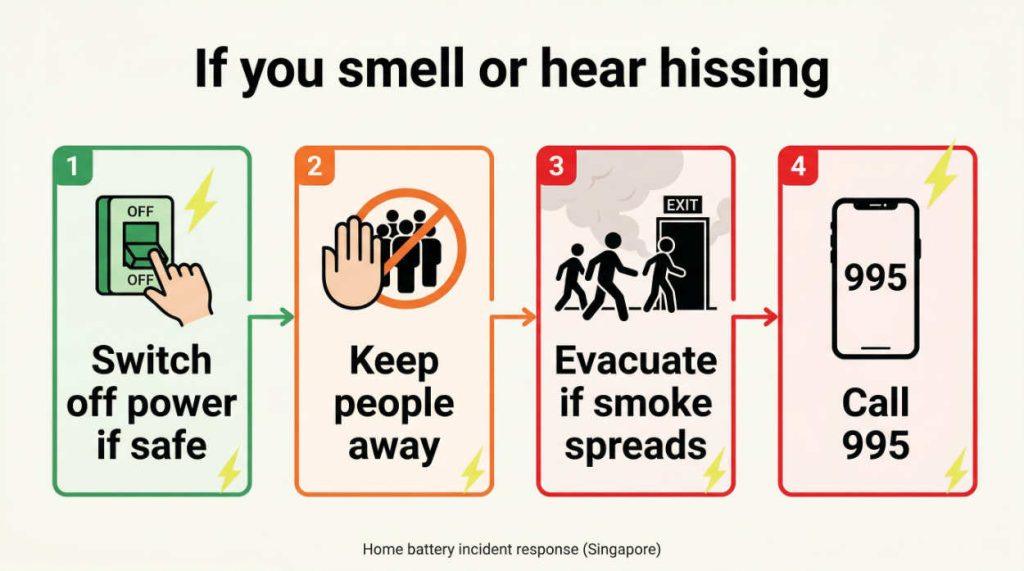
If you hear hissing or see smoke
- Stop charging immediately by switching off at the plug if it is safe to do so.
- Keep people away from the device.
- Evacuate if smoke builds fast.
Call emergency services
In Singapore, call 995 for fire emergencies. Source
Do not treat it like a normal small fire
SCDF’s public emergency guidance covers home fire response. For battery events, the key is that smoke can be toxic and the situation can escalate quickly. Treat it seriously and do not take risks.
A practical safety angle from Maximal.sg buyers
If you buy a compliant device and then later swap in random parts, you lose the point of compliance. This is where many riders accidentally increase risk. Source
Maximal.sg’s safety content around UL2272 helps buyers understand why certification matters and why using the right ecosystem parts matters for real world safety.
If you are unsure which battery or charger matches your device, start with Maximal’s battery category and contact Maximal.sg for compatibility advice before you buy.
FAQ. Fast answers for HDB riders
Why do e-bike batteries “explode” in lifts or corridors
It usually starts with battery failure or misuse. The lift is just where it gets seen. Risk rises with damaged packs, wrong chargers, cheap replacement batteries, and unattended overnight charging. (Default)
Is it safe to charge in HDB corridors
It is a bad idea from a fire safety perspective because corridors are escape routes. SCDF specifically warns against charging along escape paths.
Should I charge immediately after riding home
No. Let the battery cool. SCDF advises not charging immediately after use.
Can I use a higher power charger to charge faster
Do not. Use the correct charger for your battery system. Faster charging can increase heat and stress if the system is not designed for it. Source
What is the simplest daily habit that reduces risk most
Do not charge overnight. Charge while awake and nearby. SCDF directly advises against overnight charging and long unattended charging. (Default)
Safe charging checklist you can copy into your notes
- Charge on a hard surface in an open area
- Keep away from combustibles
- Keep away from exits and escape paths
- Do not charge immediately after riding
- Do not charge overnight
- Use original charger only
- Do not use non original batteries
- Do not modify or DIY repair the pack
- Stop using any swollen or damaged battery
SCDF’s PMD and PAB safety tips align strongly with this checklist. (Default)